

Don't Let the Death of These Tigers Slow Down the Fight Against Wildlife Crime
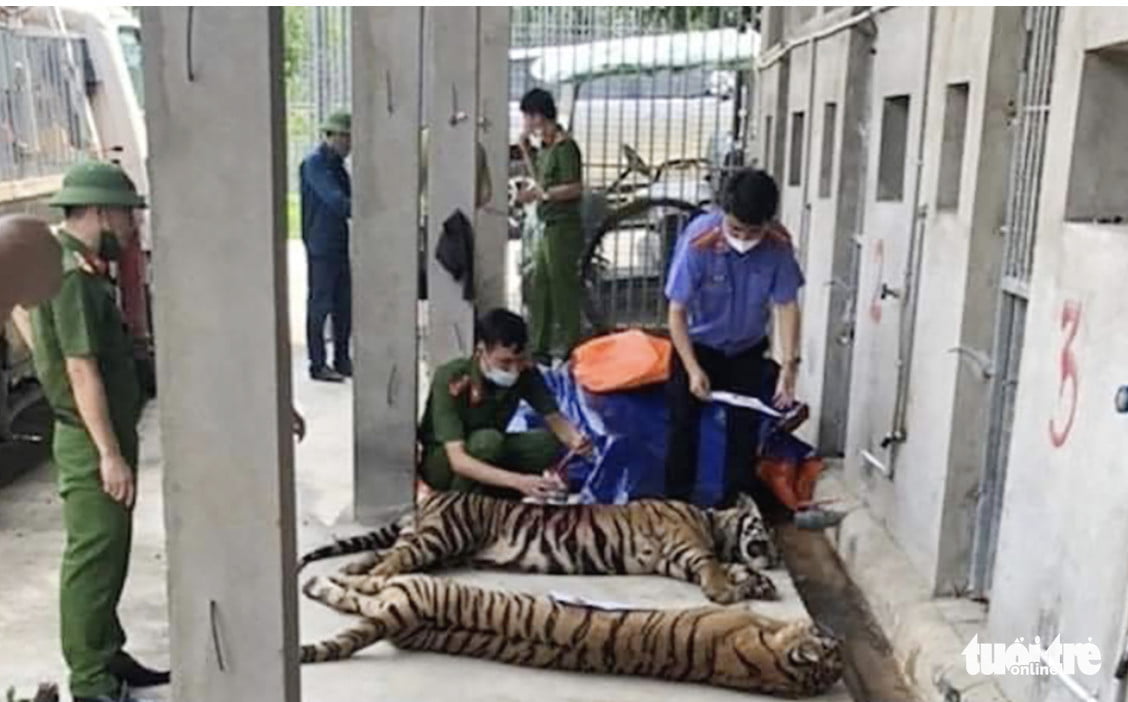
THE DEATH OF 8 OUT OF 17 CONFISCATED TIGERS IS NOT AS ENTIRELY NEGATIVE AS YOU MIGHT THINK. FROM A CONSERVATION PERSPECTIVE, SAVE VIETNAM’S WILDLIFE WOULD LIKE TO SHARE SOME PERSPECTIVES.
Over the past few hours, the online community has been in an uproar over this incident, with many questions, emotions, and conflicting opinions. As an organization dedicated to animal welfare and committed to ensuring the best possible care for animals, we are deeply saddened and share in this loss. We understand and empathize with the reasons behind the public's reaction. Most of us hope that confiscated tigers can be RELEASED BACK INTO THE WILD to live happily in the forest, or MOVED TO LARGE WILDLIFE PARKS to enjoy a new life after days of confinement in DARK PRISONS. This is also the ideal and the goal of government agencies, authorities, and the individuals and organizations fighting against the illegal wildlife trade. The exact cause of death for the 8 tigers has not yet been determined. While we await confirmation from the investigative authorities, we need to remain calm and consider the following facts.
THESE TIGERS CANNOT BE RELEASED INTO THE WILD – THERE IS NO PLACE IN THE WORLD THAT RELEASES TIGERS BORN IN CAPTIVITY OR RAISED ON FARMS
Tigers in captivity lack or have lost the ability to hunt and survive in the wild, making their chances of survival upon release virtually zero. Did you know that tigers are apex predators? To survive, they need skills in running, hunting, stalking, and defending territory. The tigers confiscated in this case were born or raised in captivity. They are overweight and have lost all their wild instincts and natural behaviors.
Releasing these tigers into the wild increases the risk of them attacking and endangering humans. Because they CANNOT HUNT FOR THEMSELVES, and are accustomed to human contact in captivity, released tigers would TEND TO APPROACH RESIDENTIAL AREAS in search of food, such as livestock or even HUMANS. Therefore, releasing these tigers could pose a threat to HUMAN LIFE. Given this risk, NO organization or individual would dare to take the chance of conducting this EXPERIMENT.
Furthermore, released tigers would bring negative impacts on wild tiger populations and other species. RECESSIVE GENES degraded by inbreeding can affect and cause unwanted mutations in the natural gene pool. Additionally, pathogens arising from captivity, transport, and illegal trade can spread dangerous diseases to wildlife and humans.
DO THESE TIGERS HAVE ANY CHANCE OF BEING MOVED TO SEMI-WILD AREAS OR WILDLIFE PARKS TO HELP RAISE AWARENESS AND EDUCATE THE COMMUNITY ABOUT CONSERVATION?
Transferring these tigers to licensed facilities with proper care and infrastructure that ensures animal welfare is the most appropriate and humane option at this time. Beyond providing them with a better life, opening these facilities to visitors provides financial resources to support animal care and raises public awareness about wildlife conservation.
However, in reality, few facilities are willing to accept these animals. Most zoos and safari parks in Vietnam have already reached their capacity for tigers. Furthermore, the costs of food, care, and maintaining a suitable habitat for tigers are very high. This is a major burden that challenges the transfer and reception of confiscated tigers. Wildlife rescue centers managed by government agencies or non-profit organizations are no exception. Most centers have limited enclosure space and can only accommodate a certain number of animals, making it impossible to accept all animals that cannot be released.
Now more than ever, we need a more nuanced perspective on what happened to the confiscated tigers. At the same time, we cannot allow illegal tiger farming to continue.
Investigations reveal that the confiscated tigers had been living for a long time in conditions with inadequate housing, care, and nutrition. Each adult tiger, weighing on average between 200kg and 250kg, was forced to live in cramped, moldy, dark cages, deprived of basic animal welfare. These living conditions severely impacted their physical and mental health, increasing the risk of obesity, joint disease, cardiovascular issues, and neurological distress. One must ask: does the "King of the Jungle" deserve to endure such a living hell?
The issues surrounding these confiscated tigers are truly unfortunate. Faced with conflicting information and opinions, more and more people are beginning to support illegal tiger farms, blaming the authorities by saying, "If we had just let the people keep them, the tigers would still be alive." We understand and fully empathize with the sentiments rooted in your love for animals. However, are you aware that the purpose of this illegal captivity is to supply tiger products to certain groups? The inevitable end for these tigers is to be slaughtered for their meat, skin, bones for glue, wine, teeth, and claws. Let us face the reality of this situation and the aforementioned problem to gain a more objective perspective and determine what the truly humane solution is for these animals.
The possession and trade of tigers and tiger products are illegal and subject to criminal prosecution under Vietnamese law. Therefore, by condoning or supporting illegal tiger farms, we are disrespecting Vietnam's legal enforcement system and abetting wrongful acts that cause serious, long-term consequences for tiger conservation in Vietnam and globally.
COURAGEOUS AND SHREWD: 3 CRIMINAL CASES CRACKED, 24 TIGERS AND 4 PANGOLINS CONFISCATED – AN ACTION DESERVING OF PRAISE AND RECOGNITION
The crackdown on three criminal cases in the first three days of August 2021 demonstrated a high level of determination in the fight to suppress the illegal trade, transport, and captivity of tigers in Vietnam. The task force conducted surveillance, raids, and arrests under immense pressure, facing dangers that only those directly involved can truly understand. Previous investigations showed that in the areas where these arrests took place, offenders often incited crowds to cause disturbances, obstruct officers, and exert pressure on authorities. Consequently, this operation was carried out swiftly to prevent any rash actions by the offenders.
To ensure the secrecy of the operation, the police officers carefully sought out reliable, locally available resources. Due to time constraints and Covid-19 social distancing regulations, it was impossible to bring in experienced tiger veterinarians to the scene. With such a large number of confiscated tigers and limited local resources, it is difficult to expect absolute perfection in every step before, during, and after the operation.
After confiscating the 17 adult tigers mentioned above, along with 7 cubs previously, the Nghe An Provincial Police sought every feasible option to process and transfer them to facilities capable of providing proper care. However, due to various objective reasons, many units were unable to accept them. Finally, all efforts were rewarded when the Muong Thanh Dien Lam Ecological Park agreed to accept the transfer from the police. Beyond the pressure of managing the transfer and intake, the officers also had to mobilize funds for the tigers' food and care.
Despite these pressures, the Nghe An Provincial Police remained determined to successfully dismantle three major cases in just three days. This achievement is of particular importance in the fight against wildlife crime. Only when the use of tiger products and the illegal trade, transport, and captivity of tigers are stopped can conservation efforts for this species succeed. We acknowledge the efforts of the Nghe An Provincial Police and hope the officers will remain steadfast and decisive in their mission to root out and prosecute illegal wildlife trade, transport, and captivity, joining hands to conserve Vietnam's wildlife.
SINCERELY,