


ASIAN ELEPHANT
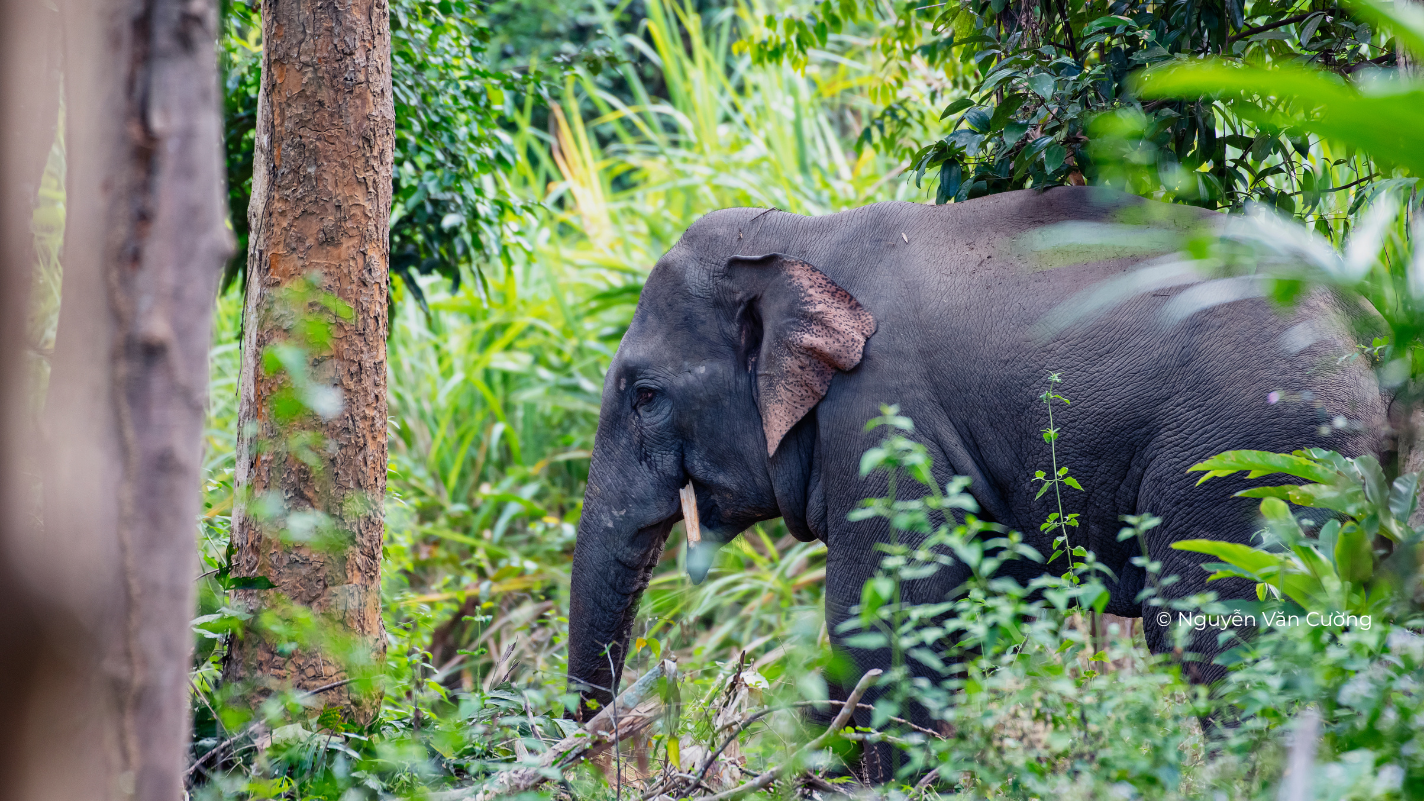
Species information
Scientific name: Elephas maximus
Height: Approximately 2–4 m at the shoulder, with males generally larger than females.
Body length: Approximately 5.5–6.5 m, excluding the tail.
Weight: Typically 2,000–5,500 kg, with adult males weighing more than 6 tonnes.
Lifespan: Approximately 60–70 years in the wild.
Diet: Herbivorous, consuming around 150–200 kg of vegetation each day, including grasses, leaves, bark, fruits, and bamboo.y 60–70 years in the wild.
Distinguishing features: Smaller ears than African elephants, a slightly arched back, and a distinctive twin-domed head. Not all males develop tusks, and most females are tuskless or have only very small tusks (known as tushes).
Behaviour: Asian elephants live in matriarchal family groups led by an adult female. They have remarkable memories, communicate using low-frequency sounds, and play a vital ecological role by dispersing seeds and creating forest pathways that benefit many other species.
Geographic distribution
Distributed across South and Southeast Asia, ranging from India, Nepal, and Bhutan to Myanmar, Thailand, Laos, Cambodia, Vietnam, Malaysia, Indonesia, and Sri Lanka.
In Vietnam, the wild elephant population is currently very small, concentrated mainly in provinces such as Dak Lak, Dong Nai, Nghe An, and a few other natural forest areas.
They inhabit tropical forest ecosystems, evergreen forests, dipterocarp forests, and transition zones between forests and grasslands.
Threat level

Endangered (EN) according to the International Union for Conservation of Nature (IUCN Red List).
Global populations are declining due to habitat loss and human-wildlife conflict.
In Vietnam, there are fewer than 200 wild elephants remaining, distributed across small, fragmented populations.
THREATS FACING ASIAN ELEPHANTS
Pu Mat National Park and Cat Tien National Park, two of the five key areas where SVW operates, are home to some of the Asian elephant populations in Vietnam. It is estimated that only about 100 individuals remain in the country, making the conservation of these survivors critical to preventing local extinction. SVW’s efforts to protect habitats, prevent poaching, and raise awareness in these regions help mitigate threats to elephant populations and create a safe environment for the species to recover.
How Is SVW protecting Asian Elephants?

Protecting the remaining wild elephant populations. Pu Mat National Park and Cat Tien National Park are two key areas where Asian elephants are still present in Vietnam. SVW implements activities to protect habitats, reduce poaching, and support the recovery of wild elephant populations.
Monitoring elephants with modern technology. SVW is a pioneer in Vietnam in using thermal-camera-equipped drones to monitor wild elephants. This technology allows us to track herds from a safe distance and collect data on their behavior and movements.
Reducing human-elephant conflict. We are building a community network of local residents, forest rangers, and scientific and technological units. We also establish early warning and rapid response mechanisms for when elephants appear near residential or agricultural areas.
Promoting sustainable conservation solutions. We aim to create livelihoods for local communities while increasing the value of conserving elephants in the wild.