


Developing species conservation strategies
Effective conservation strategies are built on scientific evidence and practical experience. Save Vietnam's Wildlife collaborates with government agencies, researchers, and partners to develop species conservation strategies and action plans, helping to secure the long-term survival of endangered wildlife in Vietnam.
The role of the strategy
.jpg)
Species conservation strategies play a vital role in identifying urgent actions and prioritizing resource allocation to protect endangered and rare species at high risk of extinction. These strategies aim not only to prevent extinction but also to focus on population recovery, habitat restoration, and increasing public awareness.
SVW leads the development and implementation of species conservation strategies for animals like pangolins and Owston's civets in Vietnam, while also participating in, promoting, and contributing to other domestic and international species conservation strategies.
EMERGENCY ACTION PLAN FOR PANGOLIN CONSERVATION IN VIETNAM 2020 - 2030
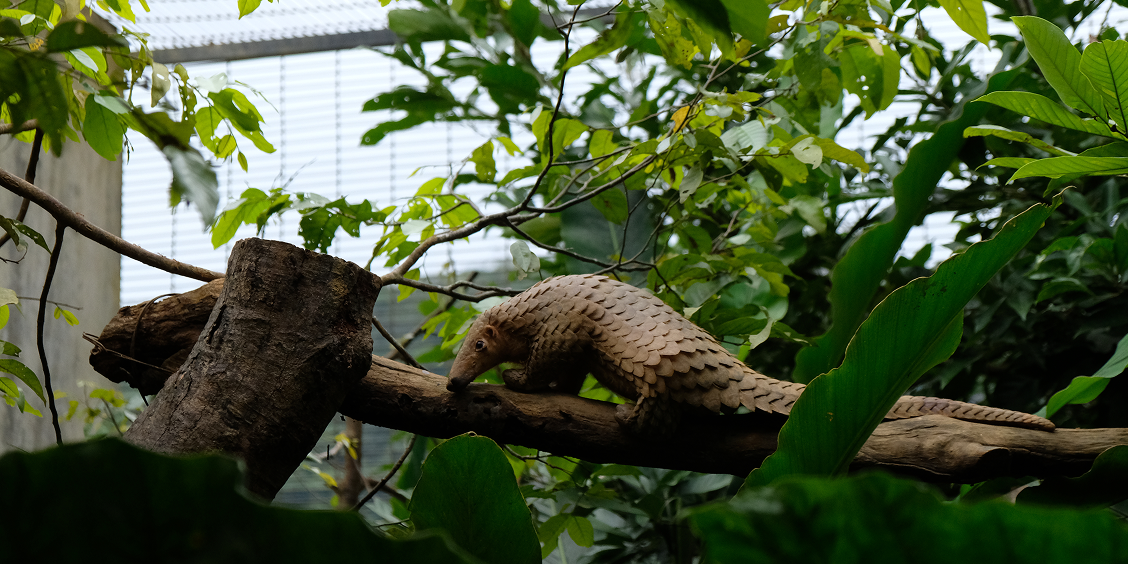
SVW is a pioneer in collaborating with the Vietnam Administration of Forestry and partners to draft an emergency action plan for the conservation of pangolin species in Vietnam. Although the draft was not officially signed due to a shift in approach, partners have utilized the plan as a basis for implementing pangolin conservation activities in Vietnam for the 2020–2030 period.

Goal 06
pangolin species
Strengthen patrols, remove snares, and prevent illegal hunting; control the use of hunting dogs; apply SMART technology in patrolling and monitoring; and investigate, track, restore, and develop pangolin populations in key National Parks and Nature Reserves.
Assess and improve the capacity of rescue centers and pangolin conservation facilities; conduct research on veterinary medicine, nutrition, and ecology in captivity to refine care and rehabilitation protocols. Implement post-release monitoring using tracking devices to evaluate adaptation in the wild; invest in facilities, train personnel for key rescue centers, and establish a national hotline to support and coordinate pangolin rescue efforts.
Enhance research and conservation capacity for pangolins through training, workshops, and professional collaboration; conduct status surveys, build databases, and research the biology, ecology, and genetics of pangolin species to support conservation, rescue, release, and law enforcement.
Develop and implement community engagement programs that are scientific, sustainable, and tailored to diverse target groups. These programs must be practical, effective, simple, and cost-efficient, encouraging active stakeholder participation to create long-term impacts for both people and wildlife.
OWSTON'S CIVET CONSERVATION STRATEGY
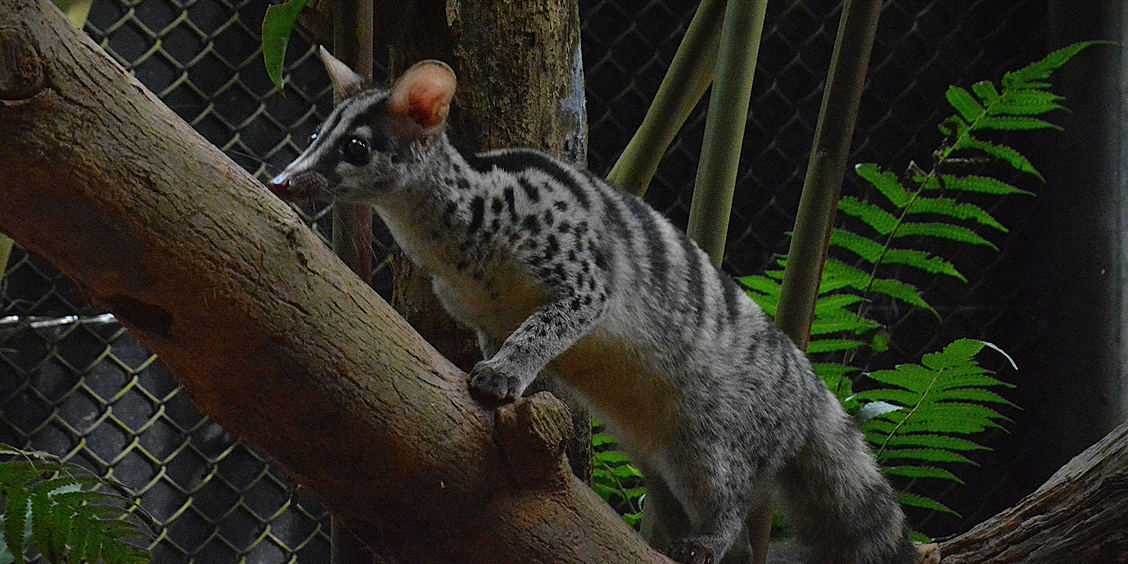
In 2019, SVW pioneered an international conference to develop a conservation strategy for the Owston's Civet in Vietnam, with the participation of government representatives and IUCN small carnivore conservation experts. The conference reached a strong consensus on establishing specific goals and activities for the conservation of the Owston's Civet.
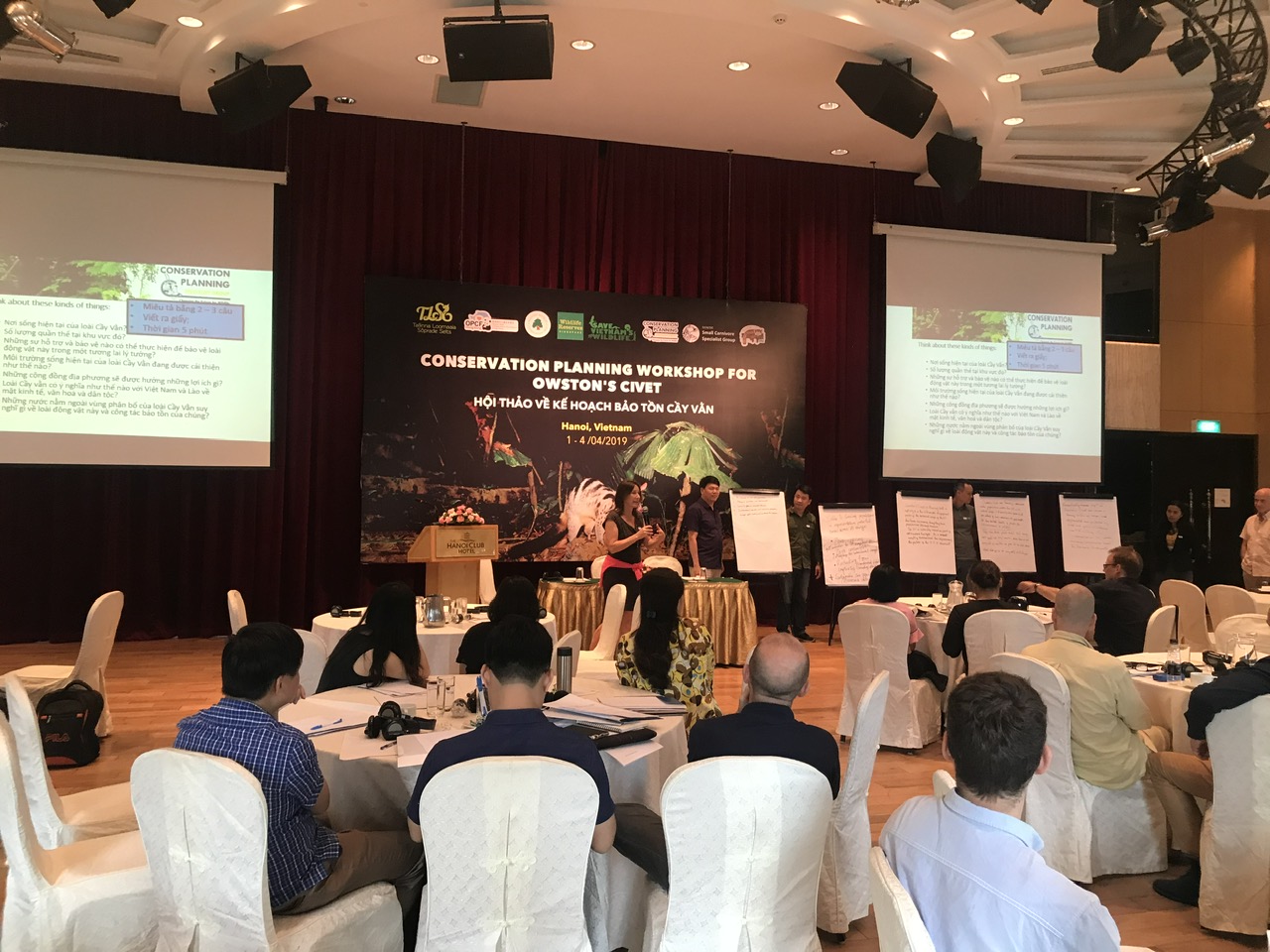
OWSTON'S CIVET CONSERVATION STRATEGY
In 2019, SVW pioneered an international conference to develop a conservation strategy for the Owston's Civet in Vietnam, with the participation of government representatives and IUCN small carnivore conservation experts. The conference reached a strong consensus on setting specific goals and activities for the conservation of the species.
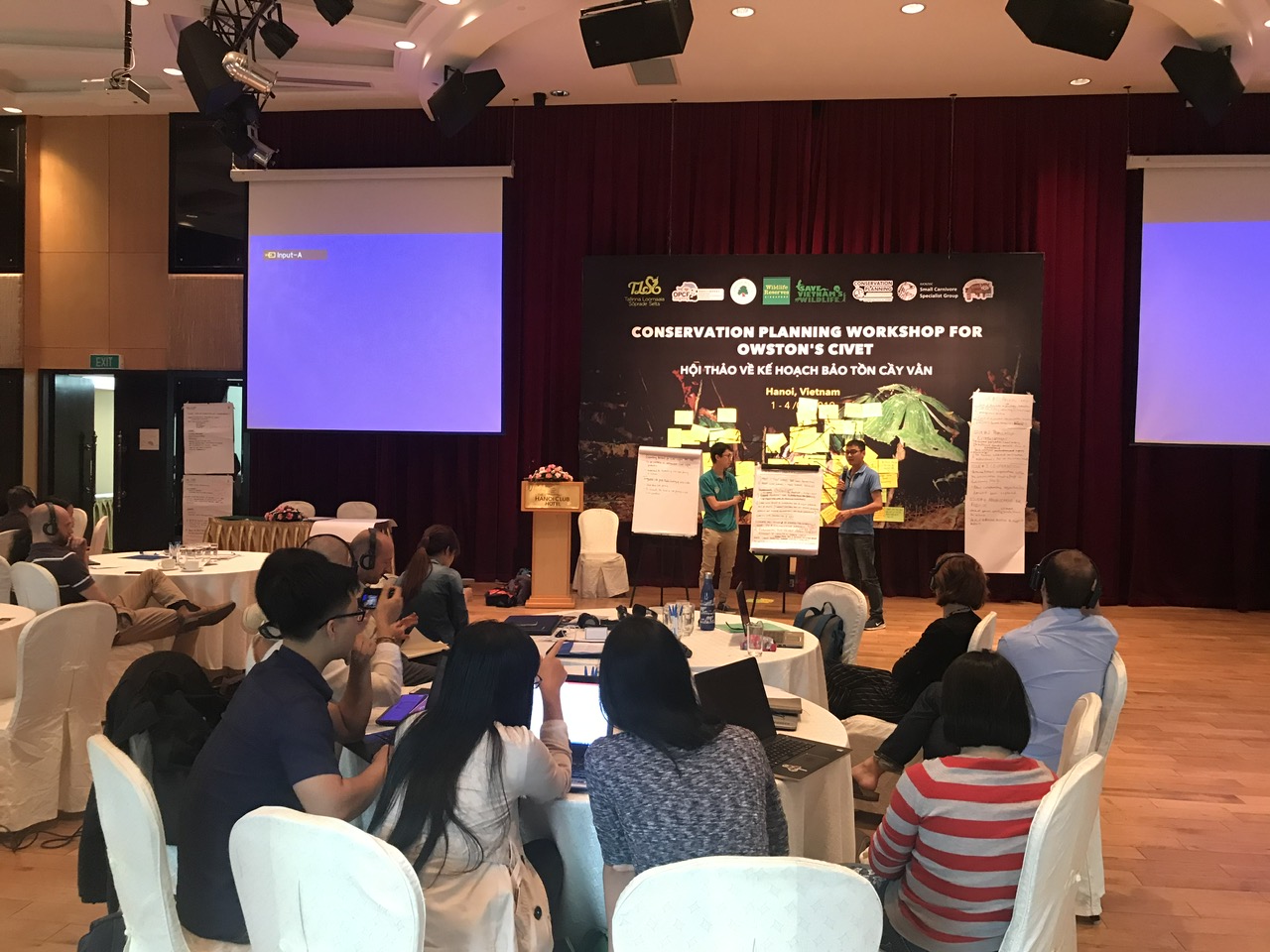
OWSTON'S CIVET CONSERVATION STRATEGY
In 2019, SVW pioneered an international conference to develop a conservation strategy for the Owston's Civet in Vietnam, with the participation of government representatives and IUCN small carnivore conservation experts. The conference reached a strong consensus on setting specific goals and activities for the conservation of the species.


Goal 04

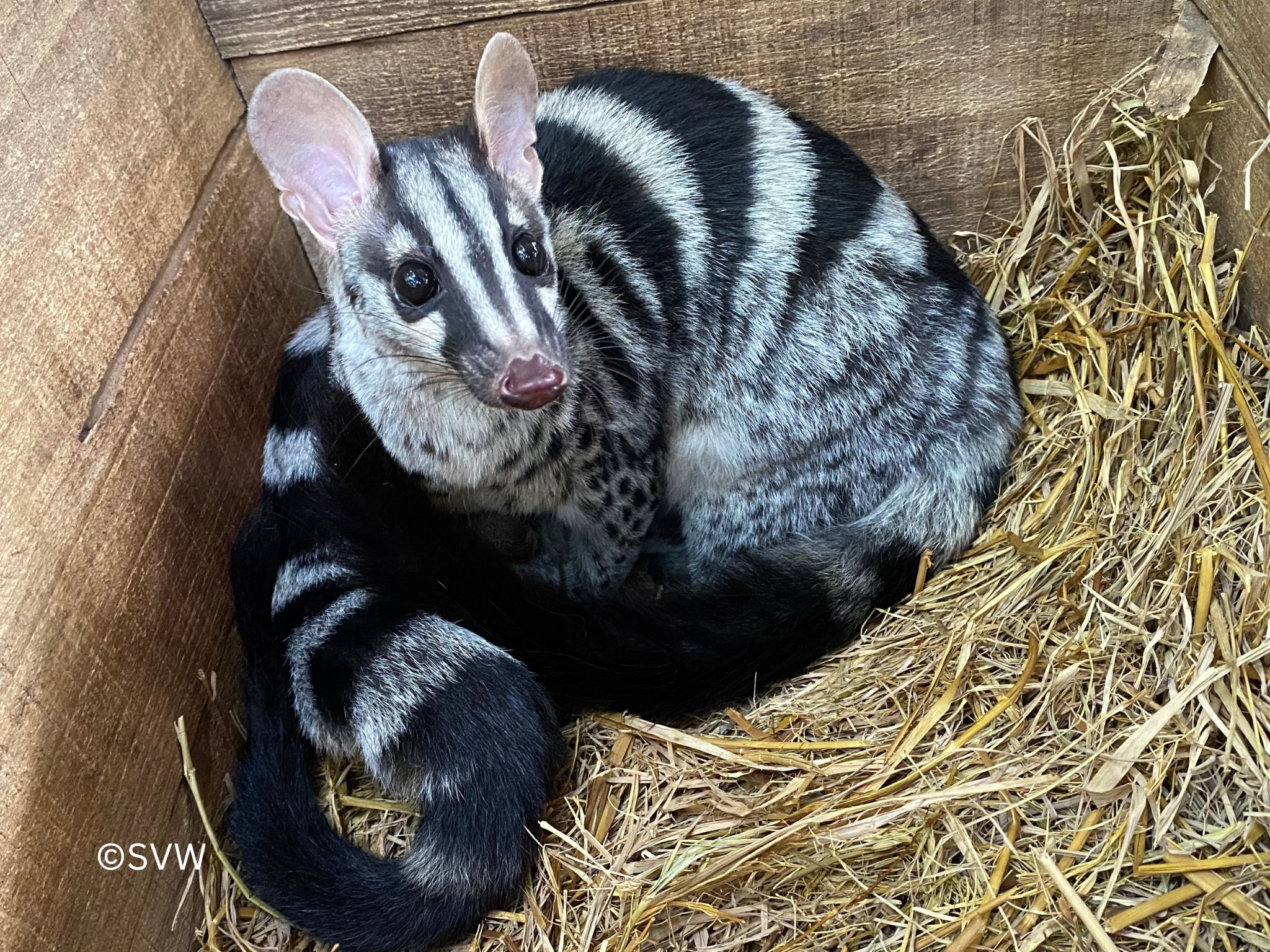
SVW conducted camera trap studies for Owston's Civets in Pu Mat National Park and Cuc Phuong National Park, recording 16 images of the species. To strengthen measures against illegal hunting and trade, SVW increased forest protection patrols in Pu Mat National Park. As a result, 16,534 snares, 137 guns, and 46 electric shock devices were confiscated, and 1,182 illegal camps were destroyed.
SVW collaborated with the press to conduct comprehensive surveys investigating the demand for bushmeat in Nghe An province. The results showed that out of 135 restaurants interviewed, approximately 60% in Con Cuong district and 48% in Vinh city sold wildlife meat. Data collected from these surveys contributed to the confiscation of 24 tigers from illegal trade and captivity, along with 6 pangolins, helping to reduce the number of restaurants selling bushmeat in the province.

SVW has conducted surveys of civet coffee farms housing carnivores in Nghe An province and the Central Highlands to assess the impact of keeping animals at these facilities for commercial purposes.

SVW is a pioneer in developing conservation breeding programs for Owston's Civets both in Vietnam and internationally. There are currently 22 individuals, 10 of which successfully bred in 2024 (see more in the "Conservation Breeding" section). SVW also collaborates and exchanges expertise with the Hanoi Wildlife Rescue Center, which manages 5 Owston's Civets, to promote genetic exchange and ensure animal welfare across facilities. Additionally, SVW facilitates the transfer of Owston's Civets confiscated from illegal captivity in Ho Chi Minh City to the breeding facility in Cuc Phuong.
Other conservation strategies involving SVW
.png)
.png)