


Reducing demand for illegal wildlife products
SVW's behaviour change programmes employ a variety of approaches, including Social and Behaviour Change Communication, law enforcement training workshops, community workshops, mobile exhibitions, and other outreach activities. These programmes aim to influence two key behaviours: (1) reducing the purchase and consumption of wildlife products, particularly bushmeat; and (2) reducing the trade in wildlife products, especially the sale and serving of bushmeat in restaurants.
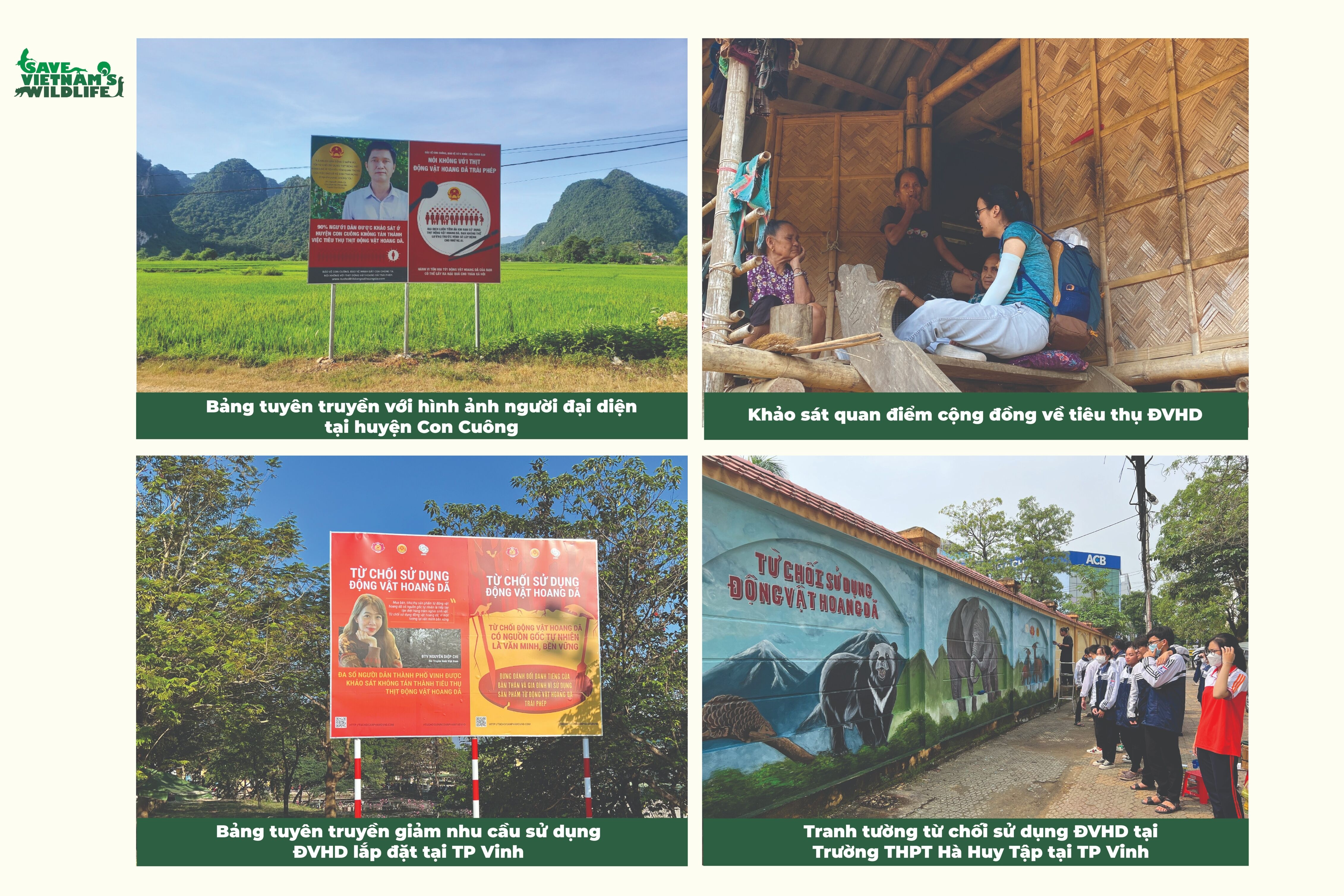
With the goal of raising awareness and changing public behavior regarding the consumption of illegal wildlife products, SVW implemented the Reducing Demand for Illegal Wildlife Products program (Reducing Demand) for the first time from 2021 to 2023 in Con Cuong District, Nghe An - a national hotspot for the poaching, trafficking, and consumption of illegal wildlife.
Activities







Applying social research to develop interventions and establish a baseline for evaluating behavioral change effectiveness

Campaigns driven by local needs and implemented by local authorities
- Installation of 643 information boards in the buffer zone of Pu Mat National Park.
- Commitment pledges signed by 1,608 civil servants and public employees to refrain from consuming, using, trading, storing, transporting, processing, or advertising illegal wildlife and wildlife products.
- 18 restaurants signed pledges to stop trading, storing, or processing wildlife and were awarded certificates by the District People's Committee.
- Outreach to over 6,194 students through various awareness-raising educational activities, including short films, social media, training sessions, and workshops.

Evidence-based and behavioral science-driven behavior change campaigns
Key achievements

The initial success of the Demand Reduction program in Con Cuong serves as a foundation for SVW to scale its behavior change communication model to four provinces—Dong Nai, Lam Dong, An Giang, and Ca Mau—focusing on three key conservation areas: Cat Tien, U Minh Thuong, and U Minh Ha National Parks.
Key achievements